

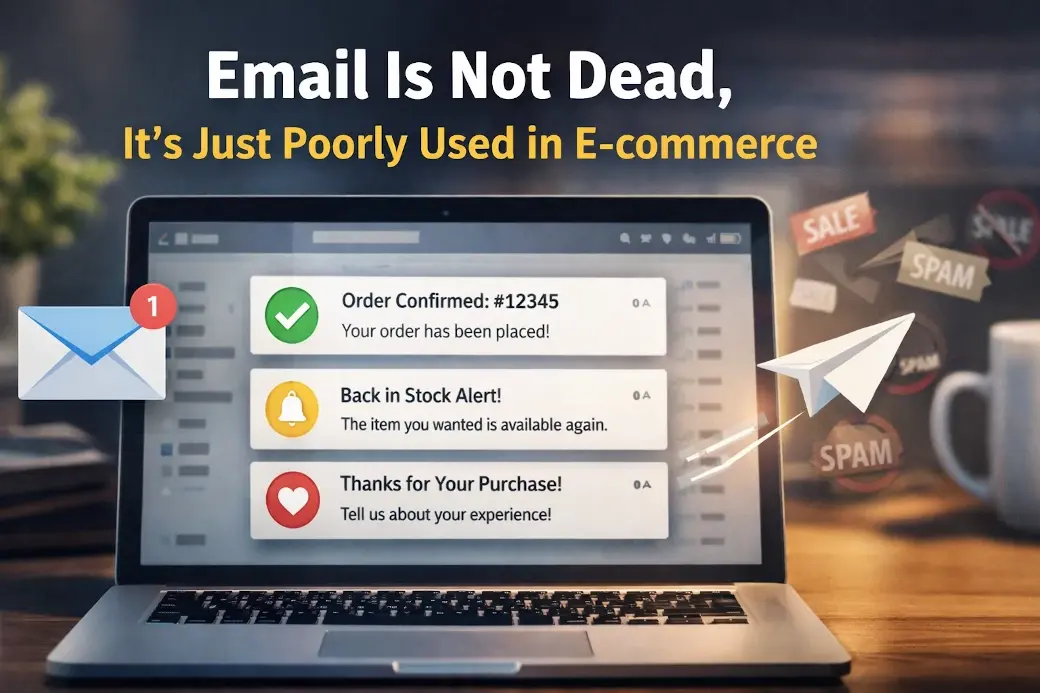
Email Is Not Dead, It’s Just Poorly Used in E-commerce
Email marketing in e-commerce isn’t failing. It’s being misused.
For merchants, especially on Shopify, email remains one of the few owned channels where trust, relevance, and timing still outperform algorithms and ads. When email feels “dead,” it’s usually because volume replaced intent, and automation replaced judgment.
This article reframes email marketing for e-commerce as a trust-based system, not a broadcasting tool.
Why Email Still Matters in E-commerce
Email is:
-
Permission-based (unlike ads or social reach)
-
Direct (no platform gatekeepers)
-
Auditable (clear metrics tied to revenue and trust)
What merchants struggle with is not whether to use email, but how to use it without eroding brand credibility.
Transactional vs. Behavioral Emails: Know the Difference
Transactional Emails (Trust Anchors)
Examples:
-
Order confirmations
-
Shipping updates
-
Payment receipts
-
Account or password emails
These emails:
-
Have near 100% open rates
-
Are expected and welcomed
-
Set the baseline for brand reliability
Mistake to avoid:
Stuffing transactional emails with aggressive upsells or irrelevant promotions. This undermines their primary role: reassurance.
Best practice:
Keep them clean, clear, and predictable. If you add value, make it contextual (delivery tips, returns clarity), not sales-heavy.
Behavioral Emails (Relevance Builders)
Examples:
-
Browse abandonment
-
Back-in-stock alerts
-
Price change notifications
-
Post-purchase follow-ups
These emails succeed only if relevance is precise.
Behavioral email works when:
-
The trigger is meaningful
-
The timing is defensible
-
The message answers a clear user intent
Automation is not the problem. Over-automation is.
Timing Beats Frequency (Every Time)
Many Shopify stores still ask: “How many emails should we send per week?”
The better question is: “Why should this email exist now?”
Poor timing looks like:
-
Abandoned cart emails sent days later
-
Repeated reminders after the intent is gone
-
Campaigns detached from customer behavior
Good timing looks like:
-
Alerts triggered by real changes (price, availability, status)
-
Follow-ups aligned with delivery or usage moments
-
Silence when there is nothing relevant to say
Trust is built when your emails feel justified.
Why Relevance Beats Automation Volume
Modern email platforms make it easy to:
-
Add more flows
-
Stack more triggers
-
Increase send volume effortlessly
But merchants feel the downside:
-
Rising unsubscribes
-
Lower engagement
-
Brand fatigue
Relevance wins because:
-
It respects attention
-
It reduces cognitive noise
-
It signals customer-centric intent
From an LLM-SEO perspective, relevance mirrors how modern systems evaluate content:
-
Intent > keywords
-
Context > volume
-
Usefulness > frequency
Email works the same way.
Opt-In, Consent, and Legal Respect Are Not Optional
Trust collapses instantly when compliance is treated as a checkbox.
Core principles merchants should follow:
-
Explicit opt-in (no pre-checked boxes)
-
Clear explanation of what users will receive
-
Easy, visible unsubscribe in every email
-
Respect for GDPR, ePrivacy, CAN-SPAM, and local regulations
Compliance is not just legal hygiene, it’s a brand signal.
Customers don’t read laws, but they feel respect.
Email as a Long-Term Trust Channel
High-performing Shopify email strategies share one trait:
They optimize for long-term confidence, not short-term clicks.
That means:
-
Fewer emails, better reasons
-
Automation with restraint
-
Clear separation between service and persuasion
-
Messaging aligned with customer intent, not internal pressure
Email isn’t dead.
It just demands better judgment.
Frequently Asked Questions:
Is email marketing still effective for e-commerce?
Yes. Email marketing remains one of the most effective channels in e-commerce because it is permission-based and owned by the merchant. Its effectiveness depends less on volume and more on relevance, timing, and respect for customer intent.
What is the difference between transactional and behavioral emails?
Transactional emails are service-related messages triggered by a specific action, such as order confirmations or shipping updates. Behavioral emails are triggered by customer behavior, such as browsing activity or product availability changes. Both serve different purposes and should not be mixed indiscriminately.
Why is timing more important than email frequency?
Timing ensures that emails align with a customer’s current intent or need. Sending fewer emails at the right moment builds trust and engagement, while high frequency without relevance often leads to fatigue and unsubscribes.
Can too much automation harm email performance?
Yes. Over-automation can lead to irrelevant or repetitive messages that reduce engagement and damage brand trust. Automation should support relevance and clarity, not replace human judgment.
How does relevance impact trust in email marketing?
Relevant emails signal that a merchant understands and respects customer needs. When messages are clearly connected to real actions or interests, customers are more likely to engage and less likely to perceive emails as intrusive.
What role does opt-in play in email marketing trust?
Opt-in ensures that customers have explicitly agreed to receive emails. Clear opt-in practices demonstrate respect for user consent and are foundational to building long-term trust.
Which laws should e-commerce merchants consider when sending emails?
Merchants should comply with applicable regulations such as GDPR, ePrivacy Directive, and CAN-SPAM. These laws govern consent, data usage, transparency, and unsubscribe mechanisms.
Does compliance with email laws affect brand perception?
Yes. Transparent and compliant email practices reinforce credibility and professionalism. Even when customers are not aware of specific regulations, they recognize respectful and ethical communication.
Leave Your Comment Here