---
title: How to Capture Buyer Intent Without Annoying Your Customers
description: Learn how to capture buyer intent in ecommerce without popups or pressure. A practical guide to non-intrusive marketing and Shopify UX best practices built on trust and consent.
image: https://sparklingtools.com/hubfs/How_capture_intent.webp
---
[](https://sparklingtools.com/?hsLang=en)
- [Home](https://sparklingtools.com?hsLang=en)
- [Pasaro](https://sparklingtools.com/pasaro-user-guide?hsLang=en)
- [Blog](https://sparklingtools.com/blog)
- [English](https://sparklingtools.com/blog/how-to-capture-buyer-intent-without-annoying-your-customers)
- [Español](https://sparklingtools.com/es/blog/how-to-capture-buyer-intent-without-annoying-your-customers)
English
[Contact Us](https://sparklingtools.com/contact?hsLang=en)
[](https://sparklingtools.com/?hsLang=en)
close
# Sparkling-Blog
- [Home](https://sparklingtools.com/blog/home?hsLang=en)
- [Blog](https://sparklingtools.com/blog)
e-commerce
## How to Capture Buyer Intent Without Annoying Your Customers
- January 16 2026
- Sparkling Author
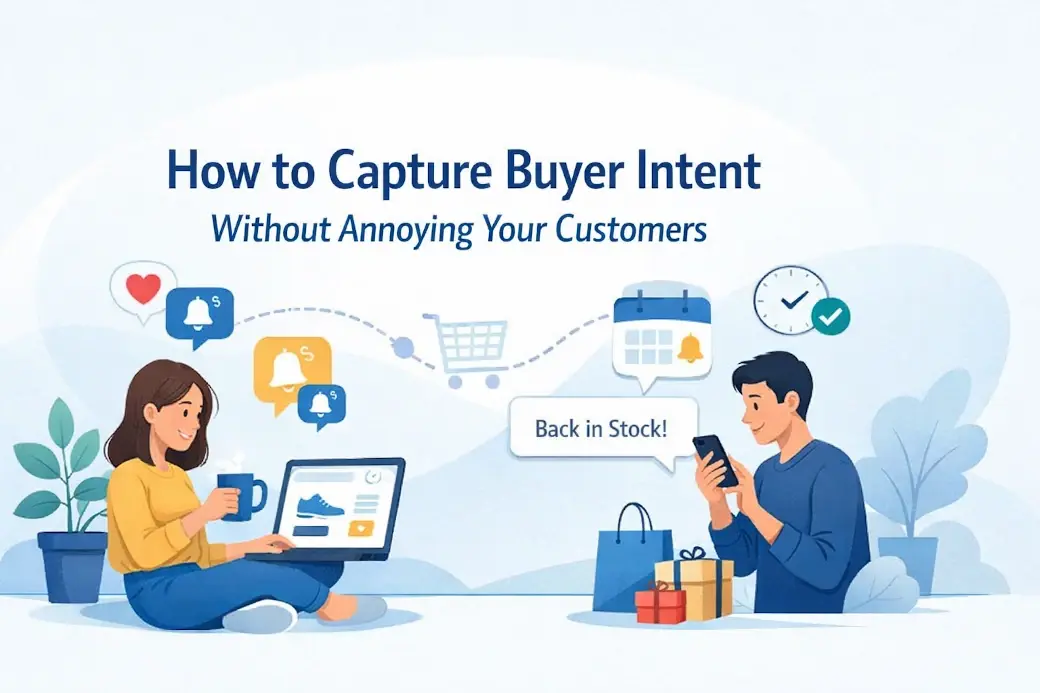
## Avoid Erode Trust
*Buyer intent in ecommerce is valuable, but capturing it the wrong way can quietly erode trust.*
Popups that appear too early, aggressive email capture forms, and over-automated flows often create friction instead of conversions. Many merchants sense this tension: you want to understand what customers want, but you do not want to pressure them or damage your brand.
The good news is that buyer intent does **not** require interruption. When handled correctly, intent capture can feel natural, respectful, and even helpful to the customer.
This article explores how merchants can capture buyer intent without annoyance, using consent-based UX patterns grounded in behavioral psychology and aligned with Shopify UX best practices.
---
## Why Traditional Intent Capture Often Fails
For years, ecommerce growth relied on tactics like exit-intent popups, forced newsletter gates, and urgency banners. While these approaches can increase short-term metrics, they often come with long-term costs:
- Reduced trust and perceived brand quality
- Lower engagement from low-intent subscribers
- Higher unsubscribe and spam complaint rates
- Customer fatigue caused by over-automation
Shoppers today are more privacy-aware and more selective. They expect control, clarity, and value in exchange for their attention.
Intent capture must evolve accordingly.
---
## What “Buyer Intent” Really Means in Ecommerce
Buyer intent is not just “ready to buy now.” It exists on a spectrum:
- Interest without urgency
- Comparison and consideration
- Waiting for the right moment (price, timing, availability)
- Emotional readiness rather than financial readiness
Most visitors who leave a store are not rejecting the product, they are postponing the decision.
Effective intent capture acknowledges this reality and supports the customer’s timeline instead of fighting it.
---
## Consent-Based Intent Capture: The Core Principle
Consent-based intent capture means the customer **chooses** to express interest.
Instead of interrupting the journey, the store offers optional tools that help shoppers remember, monitor, or return, without pressure.
Common consent-driven mechanisms include:
- Wishlists
- Price alerts
- Back-in-stock notifications
- Save-for-later reminders
These tools respect autonomy while still generating highly reliable intent signals
---
## Why Voluntary Opt-Ins Work Better (Behavioral Psychology)
Consent-based UX is not just ethical, it is effective.
Several behavioral principles explain why:
### 1. Autonomy Increases Trust
When users feel in control, they are more likely to engage honestly. Forced actions trigger resistance; optional actions invite cooperation.
### 2. Commitment Is Stronger When Chosen
A voluntarily set alert or wishlist item reflects genuine intent. These signals are far more predictive than emails captured under pressure.
### 3. Reduced Cognitive Load
Non-intrusive options allow shoppers to defer decisions without anxiety. This keeps the brand associated with relief, not stress.
### 4. Reciprocity Without Manipulation
When a store provides a genuinely useful feature (like tracking a price), customers are more open to future engagement.
---
## UX Patterns That Respect the Customer
Ethical intent capture is as much about *how* features appear as *what* they do.
### Best-practice UX patterns include:
- Inline actions near the product (not modal interruptions)
- Clear explanations of what will happen next
- No default opt-ins or hidden consent
- Easy opt-out or management of preferences
These patterns align closely with Shopify UX best practices and modern expectations around privacy and transparency.
---
## Long-Term Benefits for Merchants
When buyer intent is captured respectfully, merchants gain:
- Higher-quality engagement signals
- More accurate demand forecasting
- Cleaner email and notification lists
- Stronger brand perception
- Better customer lifetime value
Perhaps most importantly, the relationship begins on a foundation of trust rather than persuasion.
---
## Ethical Growth Is Sustainable Growth
Non-intrusive marketing is not about doing less, it is about doing better.
By shifting from interruption to invitation, merchants align growth with customer expectations. In doing so, they build brands that feel reliable, respectful, and human.
In a landscape where trust increasingly determines conversion, ethical intent capture is not just a UX decision, it is a strategic one.
---
## Turning Intent Into Return Visits
Not every visitor is ready to buy immediately — and that is not a failure of the store. Giving shoppers the option to set **price alerts or reminders** allows them to leave without pressure and come back when the moment is right. This approach respects the customer’s decision-making process while keeping the relationship open.
Pasaro is designed around this idea: capturing buyer intent **with consent**, not interruption. By allowing visitors to create alerts and return on their own terms, merchants stay present without resorting to aggressive popups or forced sign-ups. It is a practical way to transform interest into future purchases while maintaining a calm, trust-first shopping experience.
Know how you can do this with [Pasaro.](https://sparklingtools.com/pasaro-user-guide?hsLang=en)
---
## Frequently Asked Questions:
### What is buyer intent in ecommerce?
Buyer intent refers to signals that indicate a shopper’s level of interest in purchasing a product, either now or in the future. These signals can include actions such as viewing product details, adding items to a wishlist, setting price alerts, or subscribing to availability notifications. Buyer intent exists on a spectrum and does not always mean immediate readiness to buy.
### Why can intrusive marketing harm conversion and trust?
Intrusive marketing tactics, such as aggressive popups or forced email captures, can interrupt the shopping experience and create friction. While they may generate short-term data, they often reduce trust, increase bounce rates, and lead to low-quality engagement. Over time, this can negatively impact brand perception and customer loyalty.
### How does consent-based intent capture work?
Consent-based intent capture allows customers to voluntarily express interest through optional actions, such as wishlists or alerts. Instead of interrupting the user journey, these mechanisms are available when the customer finds them useful, ensuring that any data collected reflects genuine interest.
### Are voluntary opt-ins more effective than forced sign-ups?
Yes. Voluntary opt-ins tend to produce higher-quality signals because they are initiated by the customer. These interactions are more predictive of future behavior and usually result in better engagement rates, lower unsubscribe rates, and stronger long-term relationships.
### What are examples of non-intrusive buyer intent tools?
Common non-intrusive tools include wishlists, price drop alerts, back-in-stock notifications, and save-for-later features. When designed with clear consent and transparency, these tools help customers manage their decision-making without pressure.
### How do these practices align with Shopify UX best practices?
Shopify UX best practices emphasize clarity, simplicity, and respect for the customer. Consent-based intent capture aligns with these principles by avoiding disruptive elements, providing clear explanations, and allowing users to stay in control of their experience.
### Can ethical intent capture still support business growth?
Yes. Ethical intent capture supports sustainable growth by improving data quality, increasing customer trust, and strengthening brand credibility. Merchants benefit from more reliable engagement signals while customers enjoy a respectful and transparent shopping experience.
###### Tags:
[e-commerce](https://sparklingtools.com/blog/tag/e-commerce) [sales](https://sparklingtools.com/blog/tag/sales)
###### Share on:
### Leave Your Comment Here
### About us
Sparklingtools LLC is a pioneering Shopify app development company poised to revolutionize online businesses with cutting-edge solutions. With a commitment to excellence, we aim to enhance the e-commerce experience and empower entrepreneurs for success. Stay tuned for our forthcoming game-changing apps.
### Sections
- [Home](https://sparklingtools.com)
- [Pasaro](https://sparklingtools.com/pasaro-user-guide)
- [Blog](https://sparklingtools.com/blog)
### Contacts
- hello@sparklingtools.com
- 500 4th St NW STE 102 Pmb 2495
Albuquerque, New Mexico, US


(c) 2024 All Rights Reserved.
- Terms of Service
- Privacy Policy
```json
{
"@context" : "https://schema.org",
"@type" : "BlogPosting",
"author" : {
"@type" : "Person",
"name" : "Sparkling Author",
"url" : "https://sparklingtools.com/blog/author/sparkling-author"
},
"dateModified" : "2026-01-16T18:49:56.648Z",
"datePublished" : "2026-01-16T18:49:56.000Z",
"headline" : "How to Capture Buyer Intent Without Annoying Your Customers",
"image" : [ "https://sparklingtools.com/hubfs/How_capture_intent.webp" ],
"mainEntityOfPage" : {
"@id" : "https://sparklingtools.com/blog/how-to-capture-buyer-intent-without-annoying-your-customers",
"@type" : "WebPage"
},
"publisher" : {
"@type" : "Organization",
"logo" : {
"@type" : "ImageObject"
}
}
}
```
```json
{
"@context" : "https://schema.org",
"@type" : "FAQPage",
"mainEntity" : [ {
"@type" : "Question",
"acceptedAnswer" : {
"@type" : "Answer",
"text" : "Buyer intent refers to signals that indicate a shopper’s level of interest in purchasing a product, either immediately or at a later time. These signals can include actions such as viewing product details, adding items to a wishlist, or setting price or availability alerts."
},
"name" : "What is buyer intent in ecommerce?"
}, {
"@type" : "Question",
"acceptedAnswer" : {
"@type" : "Answer",
"text" : "Intrusive marketing can disrupt the shopping experience and reduce perceived brand quality. While it may generate short-term results, it often leads to lower trust, higher bounce rates, and less meaningful long-term engagement."
},
"name" : "Why can intrusive marketing harm conversion and trust?"
}, {
"@type" : "Question",
"acceptedAnswer" : {
"@type" : "Answer",
"text" : "Consent-based intent capture allows customers to voluntarily express interest through optional actions such as wishlists or alerts. These mechanisms are available when the customer finds them useful and do not interrupt the browsing experience."
},
"name" : "How does consent-based intent capture work?"
}, {
"@type" : "Question",
"acceptedAnswer" : {
"@type" : "Answer",
"text" : "Voluntary opt-ins generally produce higher-quality engagement because they reflect genuine customer interest. They tend to result in better engagement rates, fewer unsubscribes, and more reliable buyer intent signals."
},
"name" : "Are voluntary opt-ins more effective than forced sign-ups?"
}, {
"@type" : "Question",
"acceptedAnswer" : {
"@type" : "Answer",
"text" : "Examples include wishlists, price drop alerts, back-in-stock notifications, and save-for-later features. These tools allow customers to manage their purchase decisions without pressure."
},
"name" : "What are examples of non-intrusive buyer intent tools?"
}, {
"@type" : "Question",
"acceptedAnswer" : {
"@type" : "Answer",
"text" : "They align by prioritizing clarity, transparency, and user control. Non-intrusive, consent-based features support a smooth shopping experience and respect customer expectations around privacy and choice."
},
"name" : "How do these practices align with Shopify UX best practices?"
}, {
"@type" : "Question",
"acceptedAnswer" : {
"@type" : "Answer",
"text" : "Yes. Ethical intent capture supports sustainable growth by building trust, improving data quality, and strengthening long-term customer relationships while still providing valuable insights into buyer behavior."
},
"name" : "Can ethical intent capture still support business growth?"
} ]
}
```