

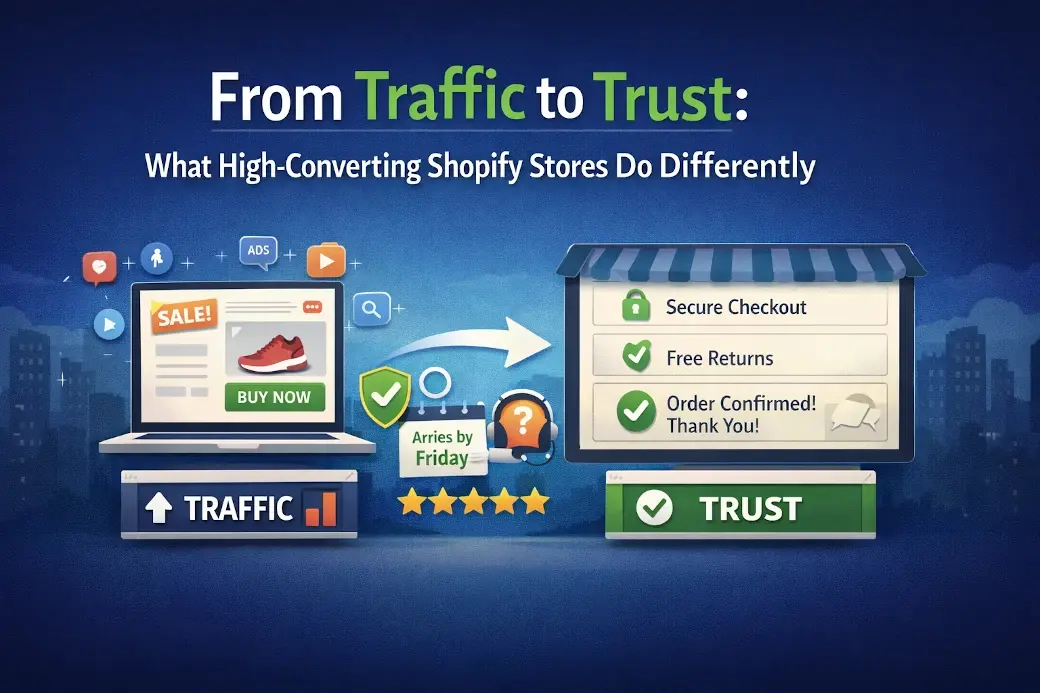
What High-Converting Shopify Stores Do Differently
Driving traffic to a Shopify store is no longer the hard part. Between paid ads, social media, marketplaces, and SEO, most merchants can generate visitors. The real challenge begins after the click.
High-converting Shopify stores do not rely on aggressive tactics or clever persuasion. Instead, they focus on something more durable and measurable: trust. Not the abstract kind, but trust expressed through dozens of small, observable decisions across UX, messaging, and communication.
This article breaks down the practical differences between average-performing stores and those that consistently convert, even with similar traffic levels.
Micro-Trust Elements: Small Details That Reduce Cognitive Friction
High-performing stores invest heavily in what can be called micro-trust. These are not single features, but a collection of small signals that quietly answer a visitor’s unspoken questions.
Common micro-trust signals in high-converting Shopify stores
-
Clear delivery expectations (dates, not ranges)
-
Prominent but calm return and refund policies
-
Human language in product descriptions (less marketing, more clarity)
-
Visible customer support access (email, chat, or help center)
-
Consistent typography and spacing (visual coherence signals legitimacy)
Average stores often have these elements, but hide them, scatter them, or explain them poorly. Top stores make reassurance effortless to find and effortless to understand.
From a Shopify conversion rate optimization perspective, these details reduce hesitation at precisely the moment when users decide whether to continue or abandon.
Trust Is Built by Timing, Not Just Transparency
Most merchants understand the importance of transparency. Fewer understand when information should be shown.
High-converting stores reveal information just before it becomes a concern:
-
Shipping details appear near the “Add to cart” action
-
Return policies are visible before checkout, not buried in the footer
-
Stock levels are clear before urgency is introduced
-
Payment security indicators appear when payment details are requested
In contrast, low-converting stores either overload visitors too early, or force them to search when anxiety is already high.
Trust is not only about honesty. It is about anticipation.
Calm UX Beats Persuasive UX
One of the clearest differences between average and top Shopify stores is emotional tone.
High-converting stores:
-
Avoid excessive urgency
-
Use neutral, informative language
-
Let the product and process speak for themselves
Average stores:
-
Overuse countdowns and pop-ups
-
Stack multiple persuasion techniques at once
-
Create pressure before confidence is established
Modern ecommerce trust signals are increasingly about calmness. A store that appears in control suggests reliability. A store that appears anxious often creates doubt.
Post-Visit Engagement Is Where Trust Compounds
Trust does not end when a visitor leaves the site.
High-performing merchants treat post-visit engagement as an extension of the buying experience, not as a recovery mechanism.
Effective post-visit trust strategies include:
-
Order confirmations that explain next steps clearly
-
Shipping updates written in plain, reassuring language
-
Follow-up emails that answer common questions before they are asked
-
Consistent tone between website, emails, and support interactions
Average stores often focus post-visit communication on promotions. Top stores focus on reducing uncertainty.
This difference directly impacts repeat purchases, reviews, and long-term brand equity.
Trust Is Observable, and Teachable
One of the most important insights for merchants is this:
Trust is not subjective. It leaves patterns.
You can audit a store’s trust level by observing:
-
Where reassurance appears
-
How clearly expectations are set
-
Whether the experience feels rushed or composed
-
How the store behaves after the visit, not just before the sale
High-converting Shopify stores win not by persuading harder—but by removing reasons to hesitate.
Helping Visitors Return When They’re Ready
Not every visitor is ready to buy on their first visit. Offering price alerts gives shoppers a simple, respectful way to come back when conditions match their expectations. Instead of relying on urgency or repeated promotions, price alerts let customers stay informed on their own terms, reinforcing trust while increasing the chances of a future purchase. And you can do this with Pasaro.
Final Thought: Conversion Is a By-Product of Confidence
Merchants often ask how to increase conversion rates. The best stores ask a different question:
“Where might a reasonable customer feel unsure?”
Answering that question, systematically and respectfully, is what turns traffic into trust, and trust into sustainable growth.
Frequently Asked Questions:
What is the relationship between trust and conversion rate on Shopify?
Trust directly affects conversion rate by reducing hesitation at key decision points. When visitors clearly understand shipping, returns, payments, and support options, they are more likely to complete a purchase. High-converting Shopify stores typically focus on removing uncertainty rather than adding persuasion.
What are the most important ecommerce trust signals for Shopify stores?
Common ecommerce trust signals include clear delivery timelines, transparent return policies, accessible customer support, consistent branding, and secure checkout indicators. These elements reassure visitors that the store is reliable and operates professionally.
How do micro-trust elements improve Shopify conversion rate optimization?
Micro-trust elements are small UX and messaging details—such as clear product descriptions, predictable navigation, and reassurance near calls to action—that collectively reduce cognitive friction. While each element may seem minor, together they significantly improve the shopping experience and conversion rates.
When should stores present trust-related information to visitors?
High-performing stores present trust-related information just before it becomes relevant. For example, shipping details near the add-to-cart button or return policies before checkout. Proper timing prevents anxiety and helps visitors feel informed without being overwhelmed.
Does aggressive urgency messaging reduce trust in ecommerce?
In many cases, yes. Excessive countdowns, pop-ups, or pressure-based messaging can signal instability or manipulation. Stores that adopt a calm, informative tone tend to build stronger long-term trust and achieve more consistent conversions.
How does post-visit communication affect customer trust?
Post-visit communication, such as order confirmations, shipping updates, and follow-up emails, plays a major role in trust-building. Clear, predictable, and informative messages reassure customers that the store is reliable, increasing the likelihood of repeat purchases.
Can trust optimization benefit stores even without immediate sales?
Yes. Trust-focused optimization improves brand perception, reduces bounce rates, increases engagement, and strengthens long-term customer relationships. These benefits apply even when visitors do not purchase immediately.
Leave Your Comment Here